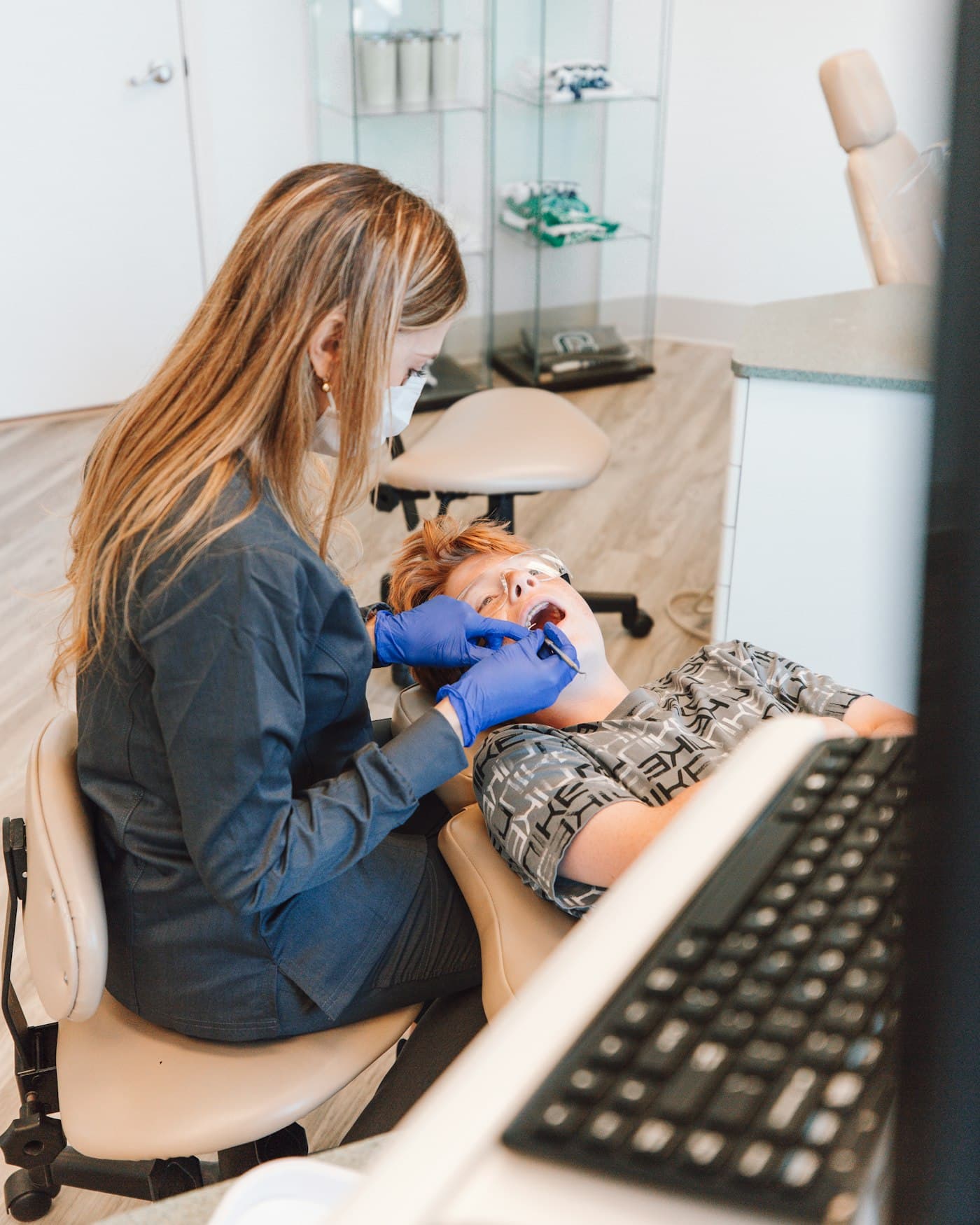
Bring your child in by their first birthday, or within six months of the first tooth appearing, which is what the American Academy of Pediatric Dentistry recommends. The visit is not really about treatment. It catches early decay while it is small and lets your child meet the chair before anything hurts.
A child's first dental visit is about far more than checking for cavities. It's the foundation for how they'll feel about dental care for years to come. A calm, positive first experience makes every future visit easier.
That first-birthday guideline surprises people because so little seems to be there yet. The point isn't the number of teeth. It's that early decay is easy to miss at home, and that habits are still forming. A child who meets a dental office before anything hurts has a very different relationship with it later.
If your child is already past that age and hasn't been seen, the answer isn't to wait longer. Book now. Morning appointments usually go better than late-afternoon ones, because a tired child has less patience for anything new. Work around the nap rather than through it.
Baby teeth hold the space that adult teeth come into, and they guide them as they arrive. They're also what your child chews and speaks with for years. A cavity in a baby tooth can hurt, it can get infected, and losing one early can crowd the teeth that follow. Treating a baby tooth isn't wasted work just because the tooth is temporary.
What happens at a first visit, and how long it takes
- A gentle look at emerging teeth and gum health
- A conversation with you about teething, feeding habits, and oral hygiene at home
- Guidance on fluoride, diet, and preventing early childhood cavities
- Plenty of time for your child to get comfortable with the chair and the environment
Very young children are often examined on a parent's lap rather than in the chair. In the knee-to-knee position, you hold your child facing you, then lay them back so their head rests on the dentist's knees. Your child keeps looking at you the whole time. It gives a clear view of every tooth surface and it takes a minute or two, which is far easier than asking a one-year-old to lie still on their own.
Most first visits are short. The exam itself is quick, and the longer part is the conversation with you. There's no need to clear your whole morning. There's also no treatment planned unless the exam finds something that needs it, and if it does, you'll hear what and why before anything happens.
How to prepare your child, and what we will ask you
- Use positive, neutral language, and avoid words like "hurt" or "shot" even if you mean well
- Consider a practice visit where they simply see the office without treatment
- Read a children's book about visiting the dentist beforehand
- Keep your own tone calm, because kids pick up on parental anxiety quickly
- Don't promise nothing will be touched or counted. If it is, you've spent their trust on one sentence.
- Don't use the dentist as a consequence for not brushing
- Don't rehearse it for a week. One short, matter-of-fact mention is enough.
- Don't apologize for them if they cry. Crying at a first visit is normal and nobody in the room is surprised by it.
- Your insurance details, if you have coverage
- A list of any medications and medical conditions
- Your pediatrician's name
- A comfort item, if your child has one they take everywhere
- Your questions, written down. You will forget them in the room otherwise.
- How the teeth get brushed at home, and who does the brushing
- Bottle and cup habits, especially at bedtime and nap time
- Pacifier use and thumb sucking
- What your child drinks between meals, and how often
- Whether cavities run in the family
- Any knock to the mouth while they were learning to walk
Where early childhood cavities come from, and what reduces the risk
Cavities in very young children tend to show up on the upper front teeth and in the grooves of the back teeth. The pattern follows how often sugar reaches the teeth, not how much arrives at once. A bottle or cup of milk or juice at bedtime leaves sugar sitting on the teeth for hours, while saliva flow drops during sleep. Sipped juice through the day does the same thing in smaller installments.
- Brush twice a day with a soft brush as soon as the first tooth appears
- Ask at the visit how much toothpaste is right for your child's age, and which type
- Do the brushing yourself, or go over it again after they've had their turn, until they can do it properly
- Start cleaning between the teeth once two teeth touch each other
- Keep sweet drinks to mealtimes and water in between
Fluoride makes enamel more resistant to the acid that causes decay, and in the office it's applied as a varnish that takes seconds. Sealants are a thin coating flowed into the deep grooves of the back teeth, where a brush bristle can't reach the bottom. Neither replaces brushing. Both reduce the number of places decay can get started, and we'll tell you whether your child needs them rather than applying them by default.
What happens if the exam finds a cavity, and what comes after
Early decay in a baby tooth doesn't always mean drilling. It depends on where it is and how far it has gone. The options can include a fluoride treatment with closer monitoring, a filling, or a sealant over a groove that's starting to break down. You'll hear what we found, what each option involves, and what happens if we watch it instead. Nothing gets booked in the same breath as the diagnosis.
From there it's regular checkups, and the interval depends on your child's own risk rather than a fixed rule. Children with early signs of decay are seen more often. Children with none can usually stretch it. As the back teeth come in, fluoride and sealants come up as options, and we'll explain what each does before recommending either.
Starting prices for exams and cleanings are on our pricing page, and the cost of anything beyond a checkup is confirmed in writing before treatment. If you have more than one child, ask about booking the family together, which often works out to be one trip instead of three.
When a first visit does not go to plan
It happens, and it isn't a failed appointment. We get what we can see, show you what we found, and finish on a good note rather than pushing. Building tolerance across a few short visits works better than winning one long struggle. Children who leave a first visit calm come back calm.
Plenty of parents bring their own history into the room. If dental visits were hard for you as a child, your child will read that on your face before anyone says a word. You don't have to pretend otherwise. Tell us at the start so we know, keep your voice flat and slightly bored, and let the appointment be dull. Dull is the goal.
What to do before you book
There's no need to over-prepare. A relaxed, matter-of-fact approach from you does more to set the tone than any amount of hyping it up beforehand.
If your child hasn't been seen yet, call us and we'll find a time that fits around the nap. Bring your questions. The talking part of that first visit is the part that changes the next ten years.