Technology
CEREC Same-Day Crown Technology
CEREC is a digital scanner, a design screen, and a small milling unit in our operatory. We scan the prepared tooth, shape the crown on screen, and the mill carves it from a solid ceramic block while you wait. The finished crown is bonded the same day. You skip the putty tray and the temporary crown.
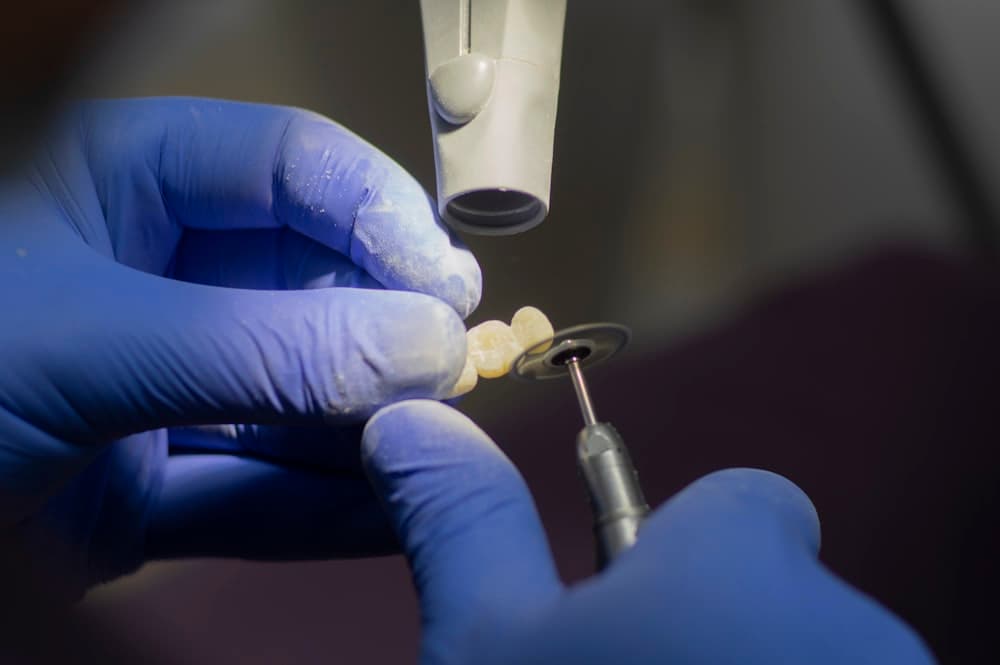
CEREC stands for Chairside Economical Restoration of Esthetic Ceramics. It is a digital system that replaces two older steps. The putty impression becomes a scan, and the lab turnaround becomes a milling unit a few feet from your chair. Your restoration is carved from a solid ceramic block in the office.
A scan only works on a tooth that is already shaped, dry, and clear at the margin, which is why the hand work comes before the camera. Older impression material recorded that shape by setting against the tooth, which took minutes and could pull or tear on the way out. Then we take the scan. A small camera wand passes over the tooth and the teeth around it, and the shape builds up on the screen as it goes. Nothing has to set against your teeth.
The design step runs on the scan rather than on a physical model, so the proposed crown is built against the prepared tooth and its neighbors as the camera recorded them. The scan has to take in the opposing arch and a bite record, because the software needs both before it can place the new chewing surface. You can see the design before it is made. If something looks off, we change it there and then.
The ceramic block goes into the mill and the carving starts. You will hear it running in the background, a steady mechanical whirr from the next bench. This is the part of the visit where you wait. Most people read, answer messages, or step outside for air.
When the crown comes out we try it on the tooth. A mill reproduces the design it was given, and the design was built from a scan, so the fit against a real tooth is the one thing no screen can confirm. A piece comes off the spindle with a matte surface, and both the polishing and the bonding that follow are hand work the machine has no part in. You chew on it before you leave.
The older path took two visits. You had an impression taken, wore a temporary crown until the lab sent the finished one, then came back to have it fitted. Temporaries come loose and can be sensitive, and the second visit is another half day away from work. Doing it in one appointment removes all of that.
We use CEREC for single teeth. Each piece is carved out of one block, so the size of that block sets the outer limit of what the mill can produce. Anything that spans more than one tooth runs past what a block of this size and a chairside mill can carve. A mill is a tool with a shape it is good at, and owning one is not a reason to make every case fit it.
A milled crown is still a crown. The tooth underneath can decay at the edge, heavy grinding is hard on any ceramic, and the gum around it needs the same brushing and flossing as everywhere else. The mill changes the shape of the appointment, not the biology of the tooth it restores.
Benefits
Why it matters for you
- A digital scan instead of a putty tray, so nothing has to set in your mouth
- The design is reviewed on screen with you before anything is made
- Milled in the office, so one appointment replaces two
- No temporary crown to wear or worry about coming loose
- Fit, contact, and bite all checked on the tooth before it is bonded
- Milled from the same high-strength ceramic used by outside labs
Where We Use It
Procedures it supports
- Same-day crowns
- Inlays and onlays
- Replacing failing or fractured fillings
- Restoring a tooth after a root canal
- Protecting a back tooth that has lost too much structure for a filling
- Replacing an older crown that no longer fits well
Questions
Common questions
Yes. CEREC does not make the ceramic, it shapes it, and the blocks are a finished industrial material before the mill ever touches them. The difference is speed and convenience, not quality. Accuracy comes from the scan rather than putty that can distort on the way to a lab, and the mill cuts to the margin drawn on the screen.
The mill is the longest machine stage, and how long it runs depends on how much ceramic has to be cut away. A scan takes a fraction of that, and the design comes first. You can wait in the room or step out, because the cutting needs no input once it begins. You leave with the finished tooth.
No. The camera records the tooth from a short distance rather than pressing against it. The mill cuts the ceramic block on its own bench, not in your mouth. Some teeth are sensitive for a few days after any crown, and we will tell you what to expect and what to do about it before you leave.
Not every one. We use CEREC for single teeth, including crowns, inlays, onlays, and restorations after a root canal. The camera also needs a clear view, so a margin that sits below the gum can be hard to capture. Where the scan or the block is the limiting factor, the case goes to a lab instead.
Blocks come in a range of shades, and one is picked for your tooth before any cutting starts, so the shade is fixed by the time the mill runs. Back teeth are straightforward. A block is one shade all through, where a lab can layer and stain a crown by hand, which matters most on a front tooth.
See it for yourself