Restorative
Same-Day Dental Crowns
A crown is a cap that covers a whole tooth when it is too cracked, worn, or broken down for a filling. Avora Dental prepares the tooth, scans it digitally, then mills your crown from a ceramic block in the office and bonds it the same day. No putty impression, no temporary. Most visits take a few hours.
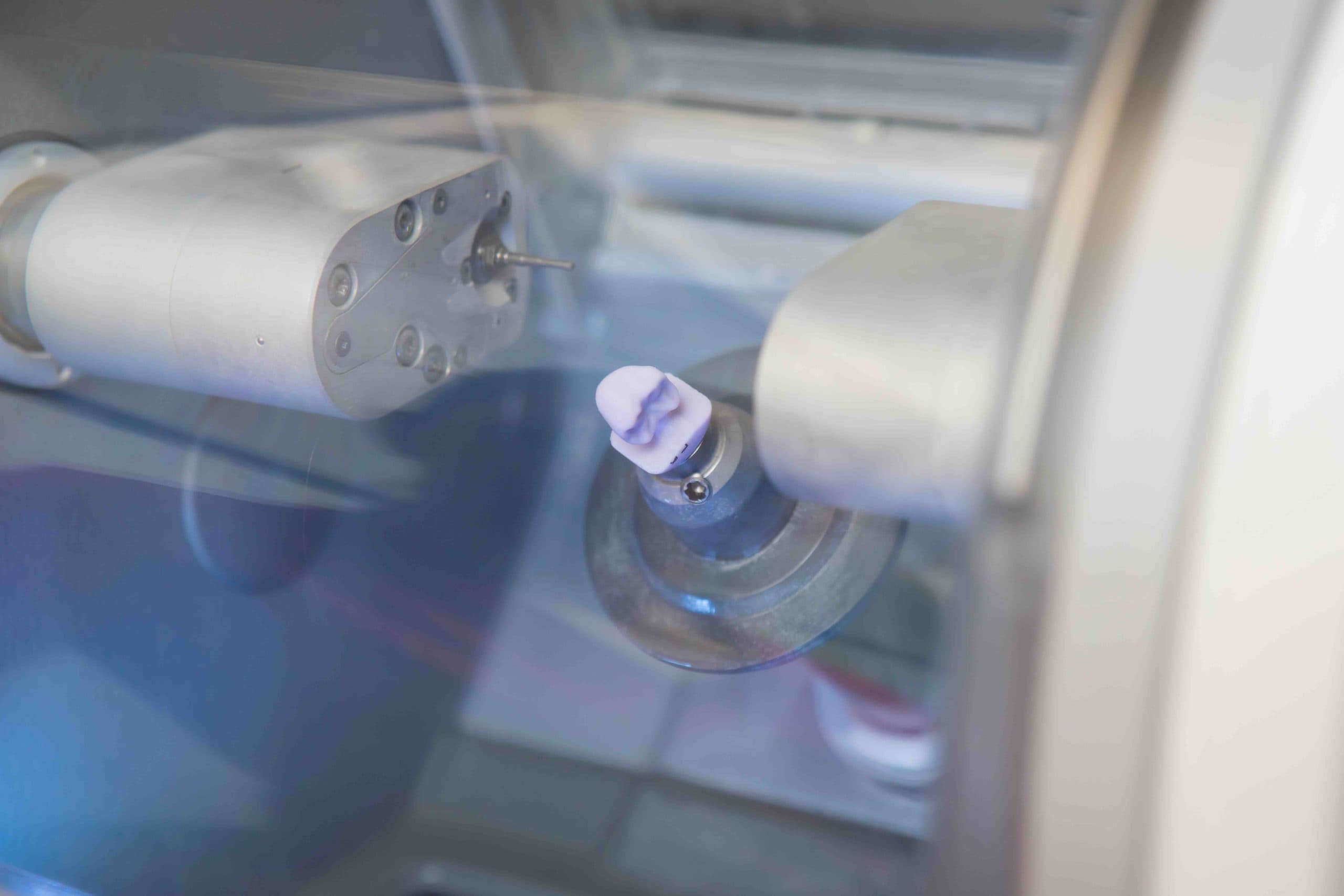
A dental crown restores a tooth that's too damaged for a filling but doesn't need to be extracted. With digital scanning and in-office milling, many crowns can be designed and placed in a single visit. No temporary crown, and no second appointment.
Your crown is custom-shaped and shaded to match your bite and your smile.
When a crown is the right choice
A filling works when there is enough healthy tooth left to hold it. When a tooth is too broken down, too cracked, or too worn for that, a filling has nothing solid to grip, and a crown becomes the honest answer. A crown covers the whole tooth, so the weakened parts are held together and can carry chewing load again. On a tooth that has had a root canal, that protection is part of the treatment rather than an extra.
The coverage is the point, and it is also the trade. Preparing a tooth for a crown removes more structure than a filling does, so we recommend one when the tooth genuinely needs it rather than as an upgrade. If a filling or an onlay will do the job, we will say so and leave the rest of your tooth alone.
Teeth usually arrive at a crown by one of a few routes, and the exam and the image tell us which one you are on.
- A large cavity, or a big old filling that is failing
- A cracked or fractured tooth that needs holding together
- A tooth that has had a root canal and needs protection
- A worn-down tooth, or one that is badly shaped or discolored
How same-day crowns work at Avora Dental
Traditionally a crown takes two visits. You have an impression taken, wear a temporary while the lab makes the crown, then come back to have it fitted. Both of those appointments have to be booked and taken off work, and a temporary that comes loose in between adds a third. With CEREC, the scanner, the design screen and the milling unit all sit in the operatory, so one visit replaces two.
The visit starts the way any crown appointment does. We numb the tooth, clear out the decay or the failing filling, and shape what is left so a crown can sit on it. Then we take the scan with a handheld camera, which means keeping your mouth open for a few passes rather than biting into a tray of putty while it sets. Nothing has to set against your teeth.
We design the crown on screen while you sit up, setting the height, the contours, and the way it meets the opposing tooth when you bite. You see the design before it is made, and if something looks off we change it there and then. Then the ceramic block goes into the mill. You will hear it running in the background, and this is the part of the visit where you wait.
When the crown comes out we try it on the tooth and check the fit at the margin, the contact with the neighboring teeth, and how it feels when you bite and slide your jaw. Then it is polished, bonded in place, and checked again. You chew on it before you leave. Most appointments take a few hours from scan to finished crown.
Same-day crown or lab-made crown?
Many crowns can be completed the same day, but not every case is a fit. Some situations, such as certain front teeth where the shade and translucency matter most, or complex bites, may be better served by a lab-fabricated crown. We'll tell you honestly which option we'd choose for your tooth and why, rather than defaulting to one approach.
We use same-day milling for single teeth. Crowns, inlays, onlays, a filling that has run out of tooth to hold it, and the restoration a tooth needs after a root canal. Larger work, like a bridge or a full arch, is planned on a different path. If your case is better sent to a lab, we will tell you that instead of fitting it to the machine we own.
Shade is the usual reason to slow down. On a back tooth, matching is straightforward. On a front tooth it is harder to get right in one appointment, because translucency and the way light passes through enamel are what make a tooth read as real. We talk that through before we start, not after the block is in the mill.
Read: same-day crowns explained →See an example of our crown work →
Caring for your new crown
The day itself has one rule worth remembering: wait until the numbness has fully gone before you eat. A numb lip and cheek are easy to bite, and that is the usual mishap after an appointment that went perfectly. Once feeling is back you can eat normally, because the crown is bonded and set before you leave.
After that, a crown does not need special products. Brush twice a day, clean between your teeth daily, and pay attention to the crown's edge at the gumline, because that is where the work is. Keep up your regular exams so anything starting there is caught while it is still small.
A milled crown is still a crown. The tooth underneath can decay at the margin, heavy grinding is hard on any ceramic, and the gum around it needs the same cleaning as everywhere else. Same-day means fewer visits, not less to do at home. Tell us if you grind your teeth, since a nightguard protects the crown from the force your jaw puts through it.
Avoid chewing ice and using your teeth as tools. With good care, many crowns last a decade or more, and how long yours lasts depends on the tooth and what your bite asks of it. If the crown ever feels high, rough at the edge, or sensitive, call us rather than waiting for your next checkup.
Crowns for Altamonte Springs and the nearby communities
Many plans cover part of the cost of a crown when it is medically necessary, though coverage varies by policy and by where you are in your annual limit. Bring your plan details to the first visit and we will check the benefits before anything is scheduled. Starting prices are on our pricing page, and your own estimate is confirmed in writing at the consultation.
Patients come to Avora Dental on State Road 436 in Altamonte Springs from Longwood, Winter Park, Maitland, and Casselberry, and a crown finished in one visit means one trip rather than two. If you have been told you need a crown, or you have a tooth that is cracked or hurting, call (407) 774-4433 or request a free consultation and we will look at it together.
If the tooth is painful now, say so when you call. The appointment for a crown needs a longer slot than a checkup, so an urgent one gets planned on the phone rather than squeezed in on arrival. A cracked tooth that is left alone rarely improves on its own.
Benefits
Why patients choose this
- One visit instead of two, with no temporary crown
- Precise digital fit
- Durable, natural-looking material
- Less time in the chair overall
Is This Right For You?
Signs to look for
- A tooth with a large filling that's failing
- A cracked or fractured tooth
- A tooth after root canal treatment
- Significant wear or a worn-down tooth
What to Expect
Your visit, step by step
A digital scan of the prepared tooth, with no impression putty
Same-day design and milling of your custom crown
A fit check and any final adjustments
Permanent bonding before you leave
Questions
Common questions about same-day dental crowns
Yes. Same-day crowns are milled from the same high-strength ceramic used by outside labs, so durability is comparable. The difference is where it is made, not what it is made of. We check the fit and your bite on the tooth before bonding it, the same way we would with a lab crown.
Plan on a few hours from the first scan to the final polish. Most of that is the preparation and the design, plus the time the mill takes. You are in the chair for the clinical parts and free to wait or step outside while the crown is carved. You leave with the finished tooth in place.
We numb the tooth before preparing it, so that part feels like having a filling done. The scan and the design involve no drilling at all. Tell us if anything feels sharp. Some teeth are tender for a few days after any crown, and we will tell you what to expect before you leave.
Not every one. We use same-day milling for single teeth, including crowns, inlays, onlays, and the restoration a tooth needs after a root canal. A bridge or a full arch is planned differently. If a tooth needs something the mill cannot make well, we will say so and send the case to a lab.
The ceramic block is chosen to match the shade of the teeth around it, and the crown is shaped on screen to follow their contours. Back teeth are straightforward. For a front tooth, shade matching is harder to get right in one visit, and we will talk through your options before we start.
It varies. Many crowns last a decade or more with good home care and regular checkups, and some go well beyond that. What decides it is the tooth underneath and what your bite asks of the crown. Heavy grinding is hard on any ceramic, so tell us if you grind and we will talk about a nightguard.