Cosmetic
CandidPro™ Clear Aligners
CandidPro clear aligners are custom trays that move your teeth a small amount at a time. You wear each one about 20 to 22 hours a day, taking them out to eat, to drink anything but water, and to brush. Dr. Shah at Avora Dental plans the case and tracks your progress. Most patients wear a retainer afterward.
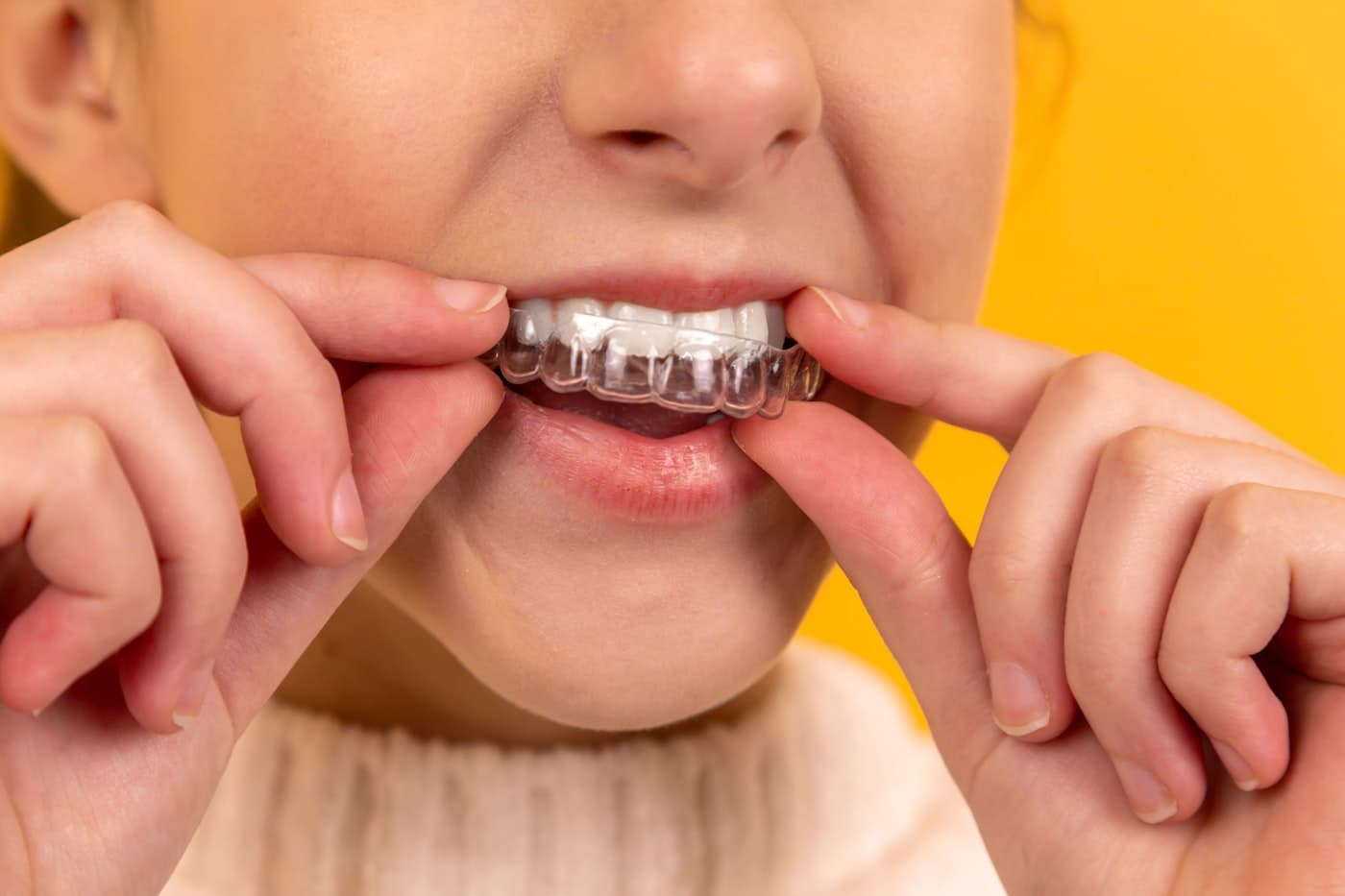
The difference between this and a mail-order kit is who looks at your teeth. Dr. Shah examines the bite and the gums before any tray is made, and reviews how the teeth are actually tracking against the plan as you go.
Being able to take them out is the practical advantage and the main risk at once: the teeth only move while the trays are in, so the result follows how consistently you wear them.
How CandidPro treatment works here
Treatment starts with a consultation and a digital scan of your teeth. From the scan Dr. Shah builds the plan and shows you a projection of the result, then a series of custom trays is made. Each tray moves your teeth a little. You switch to the next one on schedule, and he tracks your progress and adjusts the plan if something is not moving the way it was supposed to.
CandidPro is the aligner system we use, and the part that matters is where the planning happens. Direct-to-consumer kits skip the in-person exam, which is where gum disease, decay, and bite problems get caught. Moving teeth over active decay or untreated gum disease is how straightening goes wrong, and a photograph taken at your kitchen table finds neither one.
So your exam comes first. Dr. Shah looks at your gums, takes the imaging, and treats anything that needs treating before a tray goes in. Then somebody is actually watching the movement through treatment, which is what lets a small correction happen early instead of a restart later.
Expect pressure or mild soreness when you start each new tray, strongest in the first few hours after you seat it. It usually fades in a day or two as the teeth respond.
Living with aligners day to day
The trays come out for every meal and every drink except plain water, which means you will be brushing after you eat more often than you used to. A sugary or acidic drink sipped with the trays in sits trapped against your enamel instead of washing past it, so that habit matters more than it did before. Rinse, then put the trays back in promptly, because your wear clock keeps running.
Dr. Shah checks your progress against the 20 to 22 hours, because a tooth sitting behind the plan is usually a wear-time story rather than a planning error. A travel week, a run of work dinners, or a stretch of illness are worth mentioning at your next visit, so the sequence can be paced to what actually happened. The schedule is built on wear time rather than on good intentions.
Carry the case. Most lost aligners go out in a napkin. If you do lose one, tell us rather than skipping ahead to the next tray. Depending on where you are in the series, we may ask you to go back to the previous one while a replacement is made.
Same goes for a tray that will not seat, or a tooth that is not tracking the way the plan expected. Caught early, that usually means a small correction instead of starting over.
What aligners cannot fix, and when braces are better
Aligners are not a lesser version of braces. They are a different tool with a narrower range, and plenty of cases sit outside it.
Trays handle mild to moderate crowding, spacing, and minor bite issues well. Fixed braces are usually the better answer when a tooth needs rotating substantially, or when it has to travel a long way. The same goes for a bite that needs significant correction with attachments and elastics that trays cannot replicate. Wear time belongs in that same judgment, because 20 to 22 hours a day is a commitment some schedules cannot hold, and fixed braces ask nothing of the kind. They keep working whether you remember anything or not. At your consultation we will tell you honestly which is the right tool for your teeth. If your case needs braces, or a referral to an orthodontist, that is what we will say.
There are also things that no straightening does. Moving teeth changes their position, not their color and not their shape, and it will not rebuild a chipped edge. If the shade is what bothers you, whitening is the conversation to have. If a worn or chipped front edge is, bonding or veneers are. Often the order matters: move the teeth first, then decide whether anything cosmetic is still needed, because a tooth in the right position sometimes needs less work than it did crooked.
And neither aligners nor braces fix a tooth that is loose from gum disease, and neither should start over active decay. That is part of why the in-person exam comes first.
Retainers, timeline and cost
Teeth drift back. That is true after aligners and after braces, and it is the stage patients most often skip. Most patients wear a retainer afterward, and the plan for it is part of treatment rather than an afterthought you decide on at the end. Teeth that have shifted since previous orthodontic work are one of the most common reasons adults start aligner treatment, and a retainer is what stops the same drift repeating.
Treatment length varies. Minor corrections can run a few months, and complex cases over a year. How far the teeth have to travel sets most of it, and with aligners your wear time sets the rest, because hours spent out of the trays push the schedule back. We give you an estimate for your case after the exam and the scan rather than before it.
Cost tracks the same two things: how much movement your case needs and how long treatment runs. Starting prices are on our pricing page, we confirm your figure in writing at your consultation, and financing options are available.
Aligner treatment brings you back for check-ins rather than ending at one appointment, so Avora Dental on State Road 436 in Altamonte Springs is an easy drive for patients from Longwood, Winter Park, Maitland, and Casselberry. Call (407) 774-4433 or request a consultation to find out whether trays will do what you want.
Benefits
Why patients choose this
- Discreet, nearly invisible trays
- Removable for eating and cleaning
- Doctor-directed treatment planning throughout
- A digital preview of your projected results
Is This Right For You?
Signs to look for
- Mild to moderate crowding or spacing
- Teeth that have shifted since previous orthodontic treatment
- You want straighter teeth without traditional braces
- You're curious whether you're a good candidate
What to Expect
Your visit, step by step
A consultation and digital scan of your teeth
A custom treatment plan and preview of your results
A series of custom aligners, worn in sequence
Regular check-ins with Dr. Shah to track your progress
Questions
Common questions about candidpro™ clear aligners
It varies by case, from a few months for minor corrections to over a year for complex ones. How far the teeth have to travel sets most of the length, and your wear time sets the rest. We give you an estimate after the exam and the scan rather than over the phone.
About 20 to 22 hours. You take them out to eat, to drink anything other than water, and to brush. Four hours out of the trays a day is already more than the plan allows, so your schedule depends on wear time more than on anything we do at the office.
Expect pressure and mild soreness for a day or two each time you move to a new tray, strongest in the first few hours after you seat it. It eases as the teeth respond. Soreness that does not settle, or a tray that will not seat, is worth telling us about.
Most patients do. Teeth drift back after any straightening, so the retainer plan is part of treatment rather than an optional extra at the end. Teeth that shifted after braces years ago are a common reason adults start aligners, and a retainer is what prevents the same repeat.
Many people are, especially with mild to moderate crowding or spacing. Substantial rotations, long movements, and bites needing significant correction are braces cases instead. An exam and a digital scan tell us which yours is, and if it needs braces or an orthodontist we will say so.
Your case is planned and monitored in the office by Dr. Shah. A mail-order kit skips the in-person exam, which is where decay, gum disease, and bite problems get caught, and moving teeth over any of those is how straightening goes wrong. Here, somebody checks the movement throughout.
Ready to talk about candidpro™ clear aligners?