Preventive & Family
Dental Exam & Cleaning
An exam and cleaning is the routine visit that keeps bigger treatment from becoming necessary. Avora Dental reviews your history, checks your teeth, gums, bite and soft tissues, takes X-rays when they help, then removes the plaque and hardened tartar brushing cannot reach. Six months is a common interval. Visit length varies, and we tell you when you book.
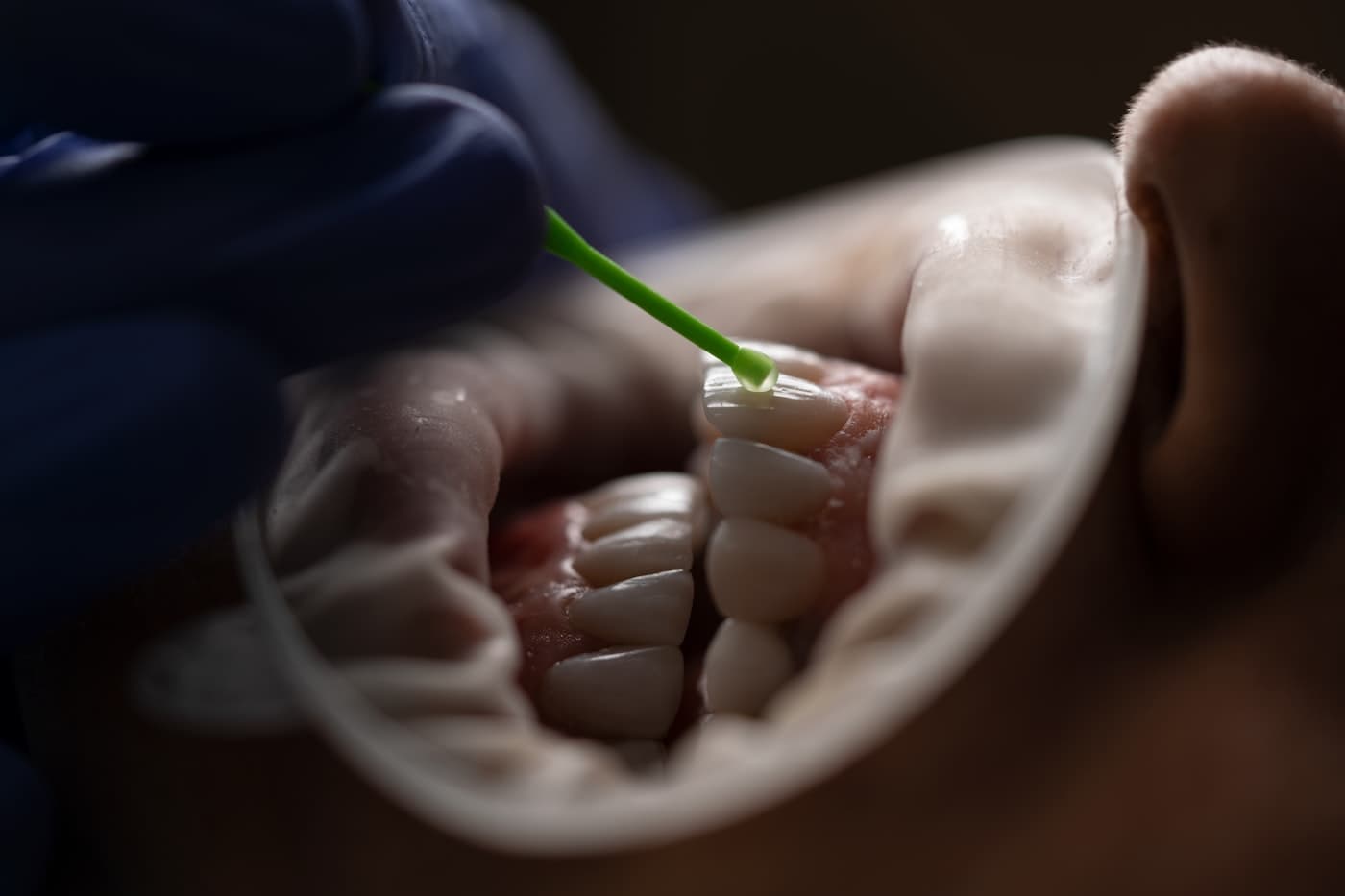
Routine exams and cleanings are the most effective, least invasive way to protect your oral health. A full exam catches problems while they are still small, and a professional cleaning removes buildup your toothbrush cannot reach.
We keep these visits efficient and comfortable, with digital imaging when needed and a clear rundown of anything we find.
What the visit includes
An exam is more than a quick look. It starts with your health history, your medications and whatever prompted the visit. From there we check each tooth, measure the health of your gums, and look at how your bite comes together. We also examine your tongue, cheeks and the soft tissue of your mouth for anything out of place. X-rays or photos get taken when they show us something a visual check cannot. Whatever we find goes on the screen, so you see the tooth we are talking about rather than taking our word for it.
The cleaning follows. Even with careful brushing and flossing, plaque hardens into tartar, also called calculus, and once it has hardened only professional instruments remove it. We clear that buildup from above the gumline and just below it, then polish the teeth. You also get home care advice that fits your actual mouth: which spots you are missing, which tool would help, what your gums are telling us.
If everything looks healthy, we say so and you leave. If something needs treatment, you get the finding, the options and the cost in writing before anything is scheduled.
How often you should come in
Six months is the common default, and for plenty of patients it is the right interval. It is a starting point rather than a rule. What actually sets your schedule is risk. How fast you form tartar. Whether your gums bleed. How many cavities you have had in the last few years, whether you grind at night, and what your medications do to your saliva.
Some patients do well on a longer gap. Others benefit from cleanings more often than twice a year, particularly anyone treated for gum disease. Buildup returns faster than a six month cycle can stay ahead of. We recommend an interval based on your mouth and then revisit it. If your gums settle, the gap can widen again.
The interval matters because the things we look for are cheapest to fix early. A groove that has just started to break down takes a filling. The same tooth two years later can need a crown or a root canal. Nothing about that is dramatic on the day, which is exactly why it gets missed.
Read: how often should you visit the dentist? →Read: the cost of ignoring a cavity →
When a routine cleaning is not the right appointment
A routine cleaning is a preventive procedure for gums that are healthy. It works above the gumline and just below it. If your gums bleed when you brush, feel sore, or have started pulling away from the teeth, the buildup has usually moved onto the root surfaces inside periodontal pockets. A routine cleaning cannot reach that. Polishing over it leaves the infection where it is and gives you a clean feeling that does not last.
What that case needs is scaling and root planing, a deep cleaning done after the area is numbed. It is often split across more than one visit so each section gets the time it needs. Different appointment, different length, different cost. We do not decide on it from the chair without measuring. We measure the pockets between your gums and teeth and compare those numbers against what healthy looks like.
So it can happen that you book a cleaning and we tell you a cleaning is not what you should be having yet. We will show you the chart and explain which readings led us there. We would rather have that conversation than take payment for a cleaning that leaves your gums where they are.
A calm visit in Altamonte Springs
Plenty of people arrive braced for a lecture, especially after a long gap. You will not get one. Tell us at the start if you are anxious or if your teeth are sensitive, and we work around it: slower, more breaks, a heads up before each step. If anything feels sharp, say so while it is happening rather than afterwards, and we will stop and adjust. Massage chairs and warm towels are there because a cleaning is easier to sit through when the room is not working against you.
Dr. Aashil Shah oversees every exam personally, so the dentist who checked your bite last time is the one checking it again. Many plans cover preventive visits at or near full benefit, though coverage varies, and we can verify your benefits before you come in.
Our office is at 249 W State Rd 436 in Altamonte Springs, there is free parking outside the door, and Avora Dental can usually fit a whole family from Longwood, Winter Park, Maitland and Casselberry into one trip rather than four. If you are new, our new patient page covers what to bring. Call (407) 774-4433 to book.
Benefits
Why patients choose this
- Catch cavities and gum issues before they hurt
- Remove plaque and tartar buildup professionally
- Fresh breath and a brighter smile
- Reassurance that nothing is being missed
Is This Right For You?
Signs to look for
- It's been six months or more since your last visit
- You notice bleeding when you brush or floss
- You have new sensitivity or discomfort
- You just want reassurance that everything looks good
What to Expect
Your visit, step by step
Review of your health history and any concerns
Digital X-rays if due, and a full visual exam
Professional cleaning and polishing
A summary of findings and next steps, if any
Questions
Common questions about dental exam & cleaning
Most patients sit through a cleaning comfortably. Sensitive teeth or tender gums change that, so tell us before we start and we will adjust how we work and take more breaks. Say something during the appointment if anything feels sharp, rather than waiting until the end, and we will stop.
A routine cleaning works on the tooth surface above the gumline and just below it, and it is for healthy gums. Scaling and root planing, the deep cleaning, clears buildup off the root surfaces inside periodontal pockets so the gum can reattach. We numb the area first, and the work is often split over more than one visit.
It varies. Whether X-rays are due, how much buildup there is and what we find all change the length, so a single figure would be guesswork. When you book, tell us when your last cleaning was and we will tell you what to expect for your visit so you can plan the day.
Often, yes, because they give us a baseline of your bone and the parts of each tooth a visual check cannot see. After that we take them based on your history and what we are monitoring, not on a fixed schedule. If another office has recent images, tell us who they are and we can request them.
Many plans cover preventive care such as exams and cleanings at or near full benefit, though the details vary by policy and by how much of your annual limit is left. We can verify your benefits before the visit, and if anything beyond the cleaning is recommended you get the cost in writing first.
No, and it is one of the most common reasons people put off calling. We look at where things actually stand, tell you plainly what we see, and sort it in an order that makes sense rather than handing you everything at once. You set the pace, and nothing gets scheduled before you agree to it.