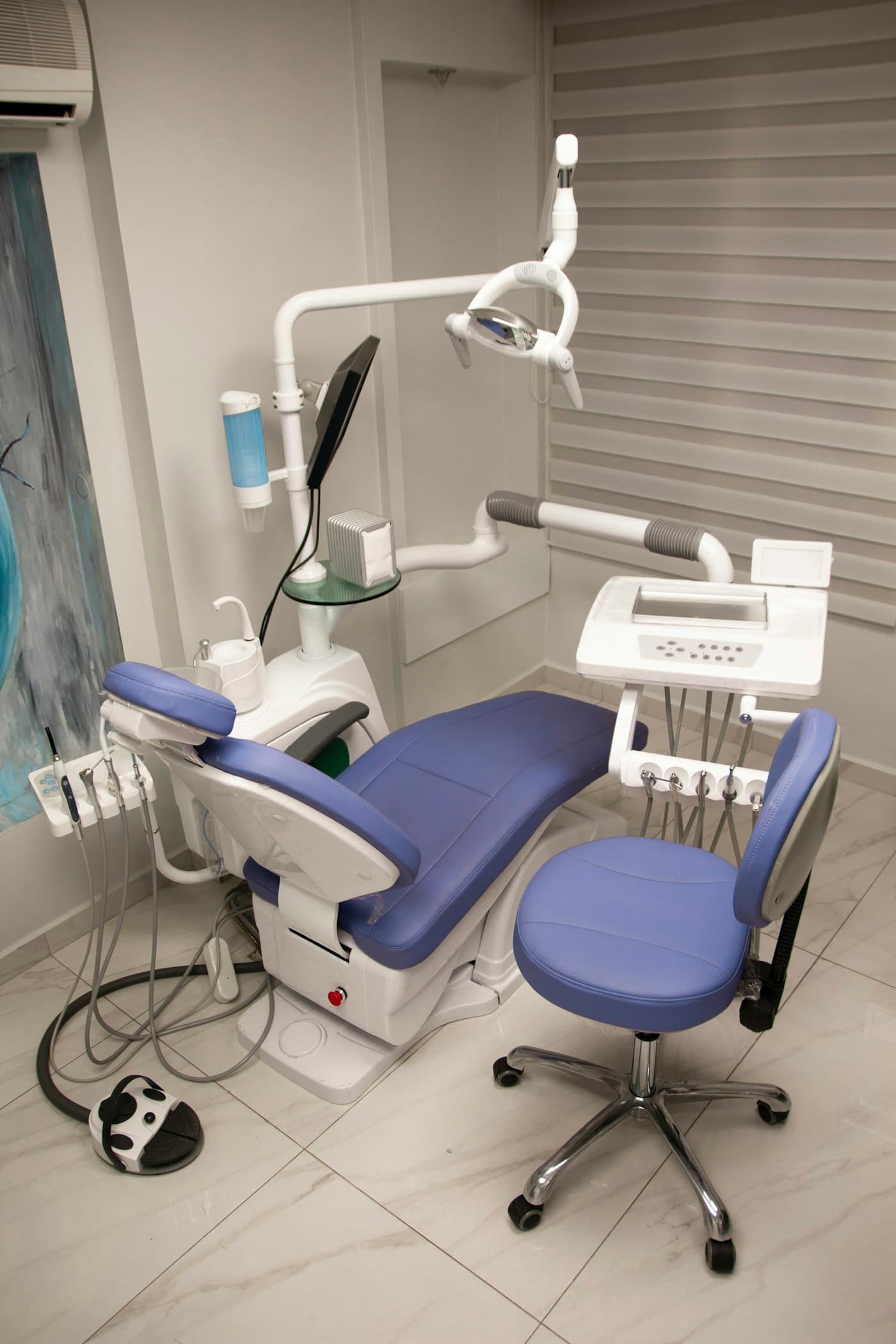
A crown used to take two appointments and a temporary in between. With CEREC, we scan the prepared tooth instead of taking a putty impression. The crown is designed on a screen with you, then milled from a ceramic block in the operatory. It's bonded the same day, and you chew on it before you leave.
Traditionally, getting a crown meant two appointments. One to prepare the tooth and take an impression, and a second weeks later to place the permanent crown once a lab had fabricated it, with a temporary crown in between. Same-day crown technology has changed that for many cases.
CEREC is short for Chairside Economical Restoration of Esthetic Ceramics, a name for the equipment rather than a grade of crown, so the question that matters is whether your tooth suits a single visit. In practice it's three things in the room with you: a small scanning camera, a design screen, and a milling unit on a bench a few feet from the chair. It replaces the putty impression and the lab turnaround. It doesn't replace the dentistry.
Temporary crowns are, by design, less durable, and they can come loose or wear unevenly while you wait for the permanent one. Same-day treatment removes that in-between period entirely, including the inconvenience of an extra appointment.
A temporary also seals the prepared tooth less completely, which is why some people get sensitivity to cold while they wait. None of that is a disaster. It's just a stretch of weeks with something in your mouth that was never meant to stay there.
What the appointment feels like, step by step
It starts the way any crown appointment starts, and the preparation is the same whether the crown is milled here or sent to a lab. What the tooth is shaped into is a form the ceramic can grip without a weak edge, which is why the margin matters more than the speed.
Then the scan. A camera wand collects a stream of images that software stitches into one model, which is why the teeth either side get scanned and not only the one being crowned. Nothing has to set against your teeth, and there's no drilling during this part.
We design the crown on screen while you sit up. Height, contours, and the way it meets the opposing tooth when you bite. You see the design before it's made, and if something looks off we change it there.
A diamond bur inside the mill cuts the block down to the design under a constant water spray. You'll hear it running, a steady mechanical whirr from the next bench. This is the waiting part of the visit. A single crown is a short carve, which is why one appointment can absorb it where a bridge or several units could not.
A crown that fits on the screen still has to fit in a mouth, which is why the try-in comes before the bonding and not after it. We check the margin, the contact with the teeth either side, and how it feels when you bite and slide your jaw. Then it's polished, bonded in place and checked again.
What the mill makes, and how it compares with a lab crown
- Your prepared tooth is scanned digitally, with no messy putty impression
- The scan is used to design your custom crown chairside
- An in-office milling machine carves the crown out of a solid ceramic block
- The finished crown is checked for fit and bonded permanently, same day
- Same-day crowns
- Inlays and onlays
- Replacing failing or fractured fillings
- Restoring a tooth after a root canal
- A back tooth that is more filling than tooth, where another filling has nothing to grip
- Replacing an older crown that no longer fits well
Yes. The ceramic material used for same-day crowns is comparable in strength and appearance to traditional lab-fabricated crowns. It's milled from the same high-strength ceramic that outside labs use. A milled crown is cut from a single solid block rather than built up in layers, so there is no internal join between materials to fail later. The main difference is convenience, not quality.
A milled crown is still a crown. The tooth underneath can decay at the edge, so the margin needs brushing and flossing like any other surface. Heavy grinding is hard on any ceramic, whoever made it. Ceramic itself does not decay, so how long a crown lasts is really a question about the tooth and the gum underneath it.
What shortens the life of a crown, and how to look after it
- Grinding or clenching, especially at night without a guard
- Chewing ice, hard candy, or anything you shouldn't be chewing
- Decay starting at the margin where the crown meets the tooth
- Gum recession that exposes the edge of the crown
- Skipping checkups, so a problem at the margin is found late
If you grind, a nightguard does more for the crown than the choice of material does.
A heavy grinder can still have a milled crown. What changes is the conversation around it, because a guard stops being optional. And if your bite is collapsing or several teeth are wearing at once, a single crown in isolation is treating a symptom.
- Brush and floss the margin where the crown meets the tooth, the same as any other surface
- Wear a nightguard if you grind or clench
- Keep your checkups, so the margin gets looked at
- Don't chew ice or open things with your teeth
- Tell us if it feels high when you bite, rather than waiting it out
What it costs, and what putting it off costs
A tooth that needs a crown is usually a tooth that has lost too much structure to hold a filling. Left alone, the remaining walls flex when you chew, and one of them eventually cracks. If that crack runs under the gum or into the root, the tooth may not be restorable at all.
Waiting also tends to turn one appointment into several. A tooth that cracks into the pulp needs a root canal before it needs a crown.
It depends on the tooth and how much of it is left. A tooth that needs a buildup under the crown is more work than one that doesn't. Ask for the buildup and the crown as separate items on that estimate, so a figure that moves on the day is not a surprise.
Financing options are available for larger plans, and our pricing page lists starting prices for our most requested treatments. Your own figure is confirmed in writing at your consultation.
Who a same-day crown is not the right answer for
A tooth has to have enough structure left to hold a crown. If too little remains above the gum, it needs a buildup first, and sometimes it can't be restored at all. Gum disease around the tooth gets treated before a crown goes on it, not after.
We use CEREC for single teeth. Spanning a gap or restoring a whole arch means several units that have to meet each other and the opposing bite, which is work a mill does not finish in one sitting. Shade matching is also harder to do in one visit on a front tooth, because a front tooth gets judged against its neighbors in daylight. We talk through your options there before we start.
If a tooth needs something the mill can't make well, we'll say so and send the case out. Owning a machine isn't a reason to use it.
What to plan for, and what to ask
Not every case qualifies for same-day treatment, but many do. It's worth asking during your consultation whether your specific situation is a good fit.
Plan on a few hours in the office. Most of that is the preparation, the design and the milling, and you're only in the chair for the clinical parts.
A crown that feels slightly high takes minutes to adjust and does damage if it's left. That one is worth a phone call.