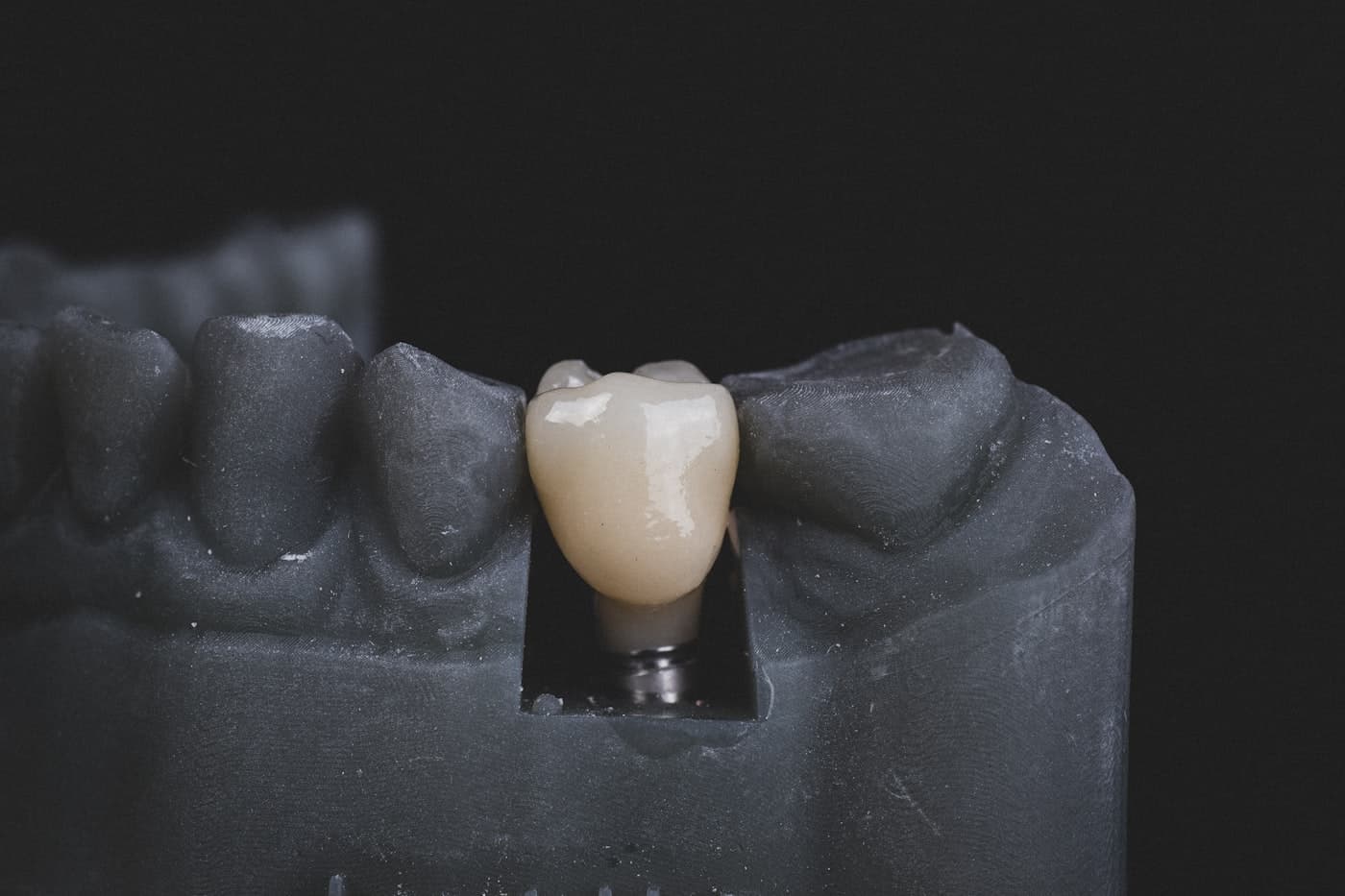
Implants cost more up front than a bridge or a denture. What the extra money buys is the root. A titanium post in the jawbone keeps the bone loaded and stimulated, and bridges and dentures don't. Bridges also typically need replacing every 10 to 15 years, so the gap narrows once you compare across decades rather than across one invoice.
It's a fair question. Whether implants are worth it depends on what you're actually comparing them to, and over what timeframe.
An implant replaces the entire tooth, root included, rather than just the visible crown. That root replacement is what preserves the jawbone underneath, something bridges and removable dentures don't do. Bone that isn't stimulated by a tooth root gradually resorbs over time, which can change your facial structure and make future dental work more complicated.
That's the part patients tend to underestimate. A bridge sits above the gum and looks fine while the ridge underneath it keeps shrinking. A denture rests on that ridge, so as the ridge flattens the denture fits worse and needs relining. An implant is the only one of the three that puts load back into the bone.
Cost, timeline, bone health, and personal preference are all valid reasons to choose a bridge or denture instead. Implants aren't automatically the best choice for every patient. They're the best choice for patients whose priorities and situation align with what implants specifically offer.
What implants cost, from one tooth to a full arch
- Bridges typically need replacement every 10 to 15 years; implants are designed to last decades with proper care
- Bridges require reshaping the adjacent healthy teeth; implants don't touch your neighboring teeth at all
- Dentures require ongoing adjustments and can affect chewing comfort; implants function much closer to natural teeth
Not every implant case costs the same. A few things move the number.
- How many teeth you're replacing, and whether they sit next to each other
- Whether the site needs an extraction or a bone graft first
- The material and design of the crown or bridge that goes on top
- One tooth, or a full arch anchored on several implants
The pricing page carries a starting figure for a single implant, which is the one part of an implant plan that can be quoted before anybody has looked at your bone. Everything in the list above is priced at the consultation instead. Financing options are available.
If you're missing most or all of the teeth in an arch, the comparison changes shape. A full-arch restoration replaces the whole arch and anchors it to a small number of implants. It doesn't rest on the gum and it doesn't come out at night. In select cases it can be completed in a single day, depending on your bone and your general health.
There's a middle option too. An implant-retained denture uses a smaller number of implants to hold a removable denture firmly in place. It costs less than a fixed full arch and still stops the denture shifting while you eat. Which of the three suits you comes down to your bone, your budget, and how much you mind something removable.
What the process involves and how it feels
Your first visit is an exam and 3D imaging, which maps your bone, your nerves, and the teeth either side of the gap. From that we write a plan with your options, the timeline, and the cost, and you review it before committing to anything. Placement itself is planned digitally and carried out under local anesthetic.
Then bone grows against the post and locks it in place, a stage measured in months rather than weeks, and the custom crown only goes on once that has happened. Some cases need preparatory work first, such as a bone graft where a tooth has been missing long enough for the ridge to shrink. It varies, and your imaging is what tells us.
Placement is done under local anesthetic, so you shouldn't feel pain while it's happening. Most patients describe soreness and swelling afterward, managed with the aftercare we give you, and it usually improves within days.
The healing months in between are mostly uneventful. Most people are back to eating normally well before the crown goes on, and a temporary tooth can often cover the gap in the meantime.
How long an implant lasts, and what waiting changes
Run those over the long term and the comparison shifts. One implant placed once is a different kind of spend from a bridge that gets remade, or a denture that needs relining as the ridge changes shape.
Implants are designed to last decades with good hygiene and regular checkups. The crown on top is the part more likely to need replacing from normal wear, even when the implant underneath is fine.
An implant sits in bone with no periodontal ligament and with less blood supply in the gum around it than a natural tooth has, so disease there can advance with fewer warning signs. Brush twice a day, clean between your teeth daily, and keep up your regular checkups. Smoking and uncontrolled diabetes both affect healing and long-term gum health, so they matter more here than people expect. So does grinding, which is why a nightguard is often part of the plan.
The bone where the root used to be starts to shrink, because nothing is loading it. The teeth either side tend to drift toward the space, and the tooth above or below it can drift down or up into it. That changes your bite, which puts uneven load on other teeth.
So waiting doesn't keep your options open. It usually narrows them. A straightforward implant site can become one that needs a graft first, and that adds both time and cost to the plan you were trying to avoid.
When a bridge or a denture is the better choice
- You want the gap closed quickly, and waiting months for bone to fuse doesn't work for you
- You have very little bone at the site and would rather not have a graft first
- The teeth either side of the gap already need crowns, in which case a bridge handles two problems at once
- Your general health makes healing less predictable, which we'd discuss honestly before recommending surgery
- A denture is what fits your budget right now, and that's a legitimate reason
Any one of those reasons is enough on its own, and none of them means an implant stops being an option for you later. A consultation that won't compare the alternatives isn't telling you enough to decide.
What to ask at the consultation
- How much bone do I have at the site, and does that change the plan?
- What would a bridge or a denture cost me instead, over the same period?
- How many visits in total, and how far apart are they?
- What happens if the implant doesn't fuse with the bone?
- Who places the implant, and who makes the crown that goes on it?
Write them down before you go in. A consultation you've prepared for gets you a plan rather than a brochure.