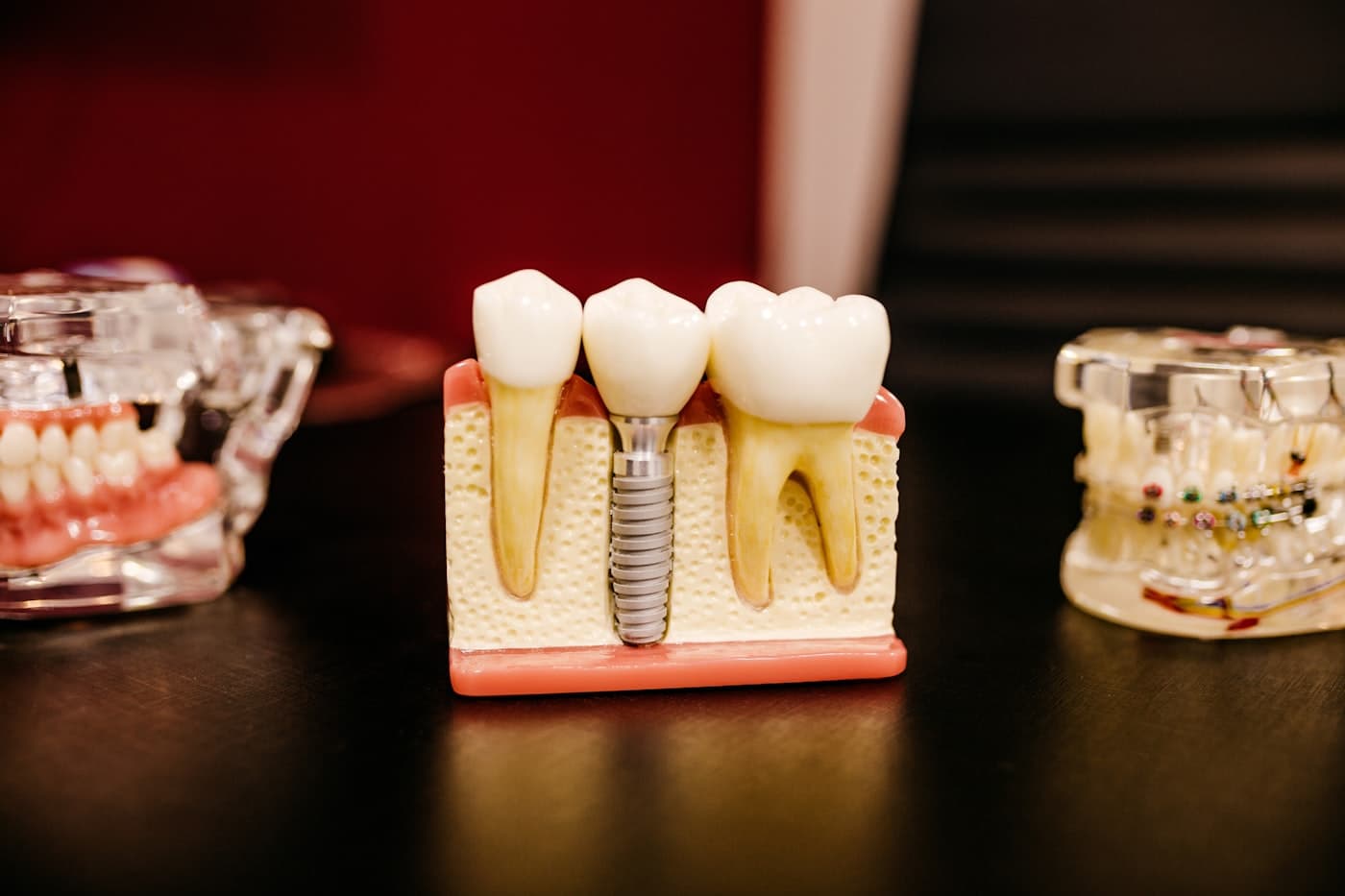
Nothing gets drilled at an implant consultation. The visit is for information. We talk through what you're missing and what you want back, then take 3D imaging to see your bone and the nerves near it. You leave with a written plan and a cost estimate, and you decide on your own timeline.
Some patients come in to ask whether they need to do anything, and that's a fair question for a back tooth nobody sees.
The bone where a tooth used to be shrinks, because nothing is loading it any more. The teeth either side of the gap drift toward it over time, and the tooth above or below it can drop down into the space. Chewing shifts onto the other side, which loads those teeth harder than they were built for.
None of that happens quickly, and none of it is a reason to be rushed. It's the reason the conversation is worth having while the bone is still there to work with.
Plan on longer than a checkup. There's imaging, an examination and a conversation, and the conversation is the part worth not rushing. No drilling happens. Nothing is placed. You don't need to decide anything while you're sitting there.
Most patients bring someone with them, which helps. Two people remember more of a plan than one.
What we ask about, and what to bring
We'll start by talking through what brought you in, whether that's a single missing tooth, several gaps, or a full-arch situation. Then what outcome matters most to you: function, appearance, or both.
Your medical history matters more here than it does at a checkup. An implant depends on bone healing around a titanium post, so we ask about diabetes control, medications that affect bone, smoking, and any history of gum disease. None of those is automatically a no. They change how we plan and what we tell you to expect.
We also ask whether you grind your teeth, and look for the wear that gives it away. Grinding loads an implant crown hard, so a nightguard is often part of the plan.
- A list of your medications and supplements
- Your medical conditions, and your physician's name if you're under ongoing care
- Your insurance details, so your benefits can be verified
- Any recent X-rays from another dentist
- Your questions, written down
What the imaging shows, and the options that follow
Digital X-rays or 3D imaging give us a clear picture of your jawbone, the position of nearby teeth and nerves, and how much bone is available to support an implant. This is the information that actually shapes your treatment plan.
3D imaging adds the dimension a flat X-ray can't. It shows how wide and how tall the bone is at the site, where the nerve runs in the lower jaw, and how low the sinus sits in the upper jaw. That's what decides where an implant can go and what length it can be.
We examine the rest of your mouth too, because an implant goes into a working system. Gum health around the neighboring teeth changes the plan. So does how your bite comes together, and whether a tooth still in the socket needs to come out first.
Then we lay out what would actually work for your case. Usually it's one of these.
- Single implant for one missing tooth
- Multiple implants or an implant-supported bridge
- Full-arch restoration if you're missing most or all of your teeth in one arch
- Whether any preparatory work (like a bone graft) is needed first
How long the plan takes, and whether teeth can go in the same day
You'll leave with a specific, written plan: what's involved, roughly how long it will take, and the cost, so you can make a decision on your own timeline, without pressure.
On timing, the honest answer is that it varies. The implant needs time to fuse with the bone, which often takes a few months, and some cases need preparatory work first. Your plan gives you a realistic sequence for your case rather than a brochure figure.
In select cases, yes. A full arch can sometimes be restored on the day the implants go in, because several posts splinted together share the load that a single post would have to carry alone. Whether it's right for you depends on your bone and your overall health, which is exactly what the consultation is for.
For a single implant it's less common, because the post needs to fuse before it can carry a crown and chewing forces. Ask at the consultation and you'll get a straight answer for your case rather than the version from the advertising.
What happens after you agree, and what the cost depends on
Most cases follow the same path, with the stages that don't apply to you taken out.
- Removal of a tooth that can't be saved, if there's still one in the site
- Bone grafting where the site needs building up first, then healing time
- Guided placement of the implant, planned digitally beforehand
- Healing, while bone grows onto the titanium surface and locks the post in place. This often takes a few months.
- Placement of the crown, bridge, or arch, once the post can carry a load
- Regular checkups to keep the implant and the gum around it healthy
That last line matters more than it looks. An implant can't decay, but the gum and bone around it can still develop disease if they're neglected. Ask at the consultation which cleaning tools suit the restoration you are getting, because a single crown, a bridge, and a full arch are each cleaned differently. The bone level around the post is measured at each checkup, which is how trouble gets caught before the implant feels loose.
- How many teeth you're replacing
- Whether a tooth has to be removed first
- Whether a bone graft or sinus work is needed
- The restoration on top, from a single crown to a full arch
- What your plan pays, once your benefits are verified
Starting prices for implant treatment are published on our pricing page. Your own figure is confirmed in writing at your consultation, and financing options are available for larger plans.
When an implant is not the right answer
If bone volume is short, grafting can often build the site up before the implant goes in. That adds a stage and more healing time. You should hear that at the consultation, not halfway through treatment.
Implants aren't the only answer, and they aren't always the best one. A bridge uses the teeth either side to carry a replacement tooth, which means preparing healthy teeth but avoids surgery and bone healing. A removable denture costs less up front and can usually be made faster.
Both of those typically need adjustment or replacement over time, while an implant is designed to last for decades and helps preserve the bone where the tooth used to be. If your health, your bone or your timeline points away from an implant, we'll tell you at the consultation rather than after you've committed.
What to ask while you are in the chair
- Can you show me the bone at the site on the scan
- How many visits, and what happens at each one
- What has to heal before the next stage can start
- What happens if the graft or the implant doesn't take
- What will I have in the gap in the meantime
The last one surprises people. For a visible tooth there's usually a temporary option while the site heals, and it's worth settling that before treatment rather than discovering it afterward.
There's no such thing as a silly question at this visit. Come with your list.