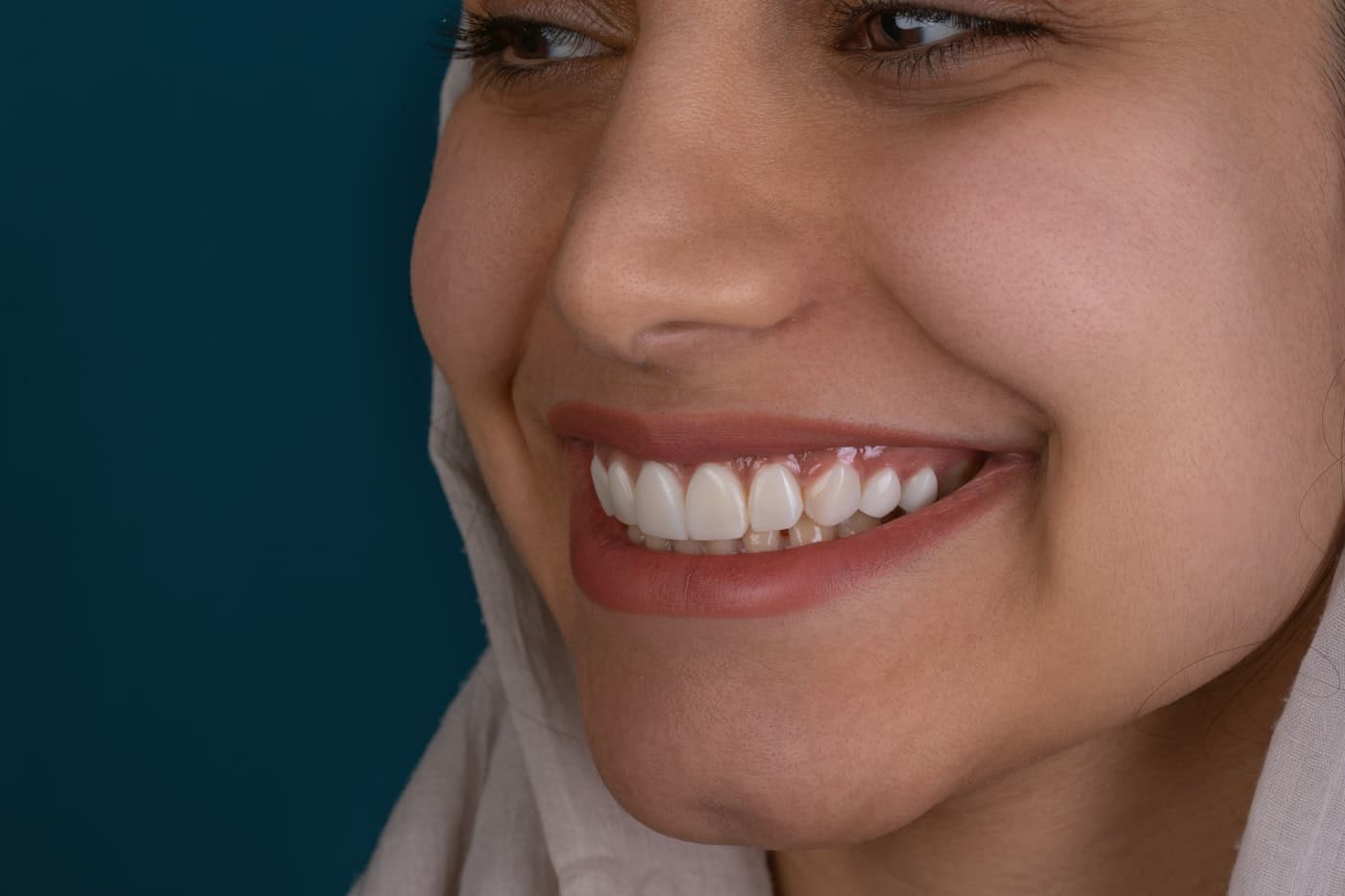
Four things tell you whether a cosmetic dentist is the right fit. Before and after photos of their own patients, not stock images. A planning process that previews your result before you commit. A full cost and timeline in writing before any work starts. And a consultation you leave informed rather than pushed. Here's how to check each one.
Cosmetic dentistry is part clinical skill, part artistic judgment, which makes choosing the right provider a bit different from picking a dentist for a routine filling. Here's what's actually worth evaluating.
You don't have to commit to a full plan at the first visit. Whitening first sets a baseline shade, and many patients then choose veneers for specific teeth rather than all of them. Starting with the two teeth that bother you most is a legitimate plan, and a provider who's comfortable with that is usually one worth staying with.
Cosmetic work is a collaborative process. If a provider isn't listening to what you actually want, or is pushing you toward a bigger treatment plan than you asked about, that's worth paying attention to.
Watch for pressure to decide at the consultation, a discount that expires that day, or an answer to the cost question that stays vague. A second opinion is normal, and nobody competent minds you getting one.
What their own case photos and planning process should show
Before and after photos of actual patients, not stock imagery, give you a much better sense of a provider's aesthetic style and consistency than a service list ever will.
Look for cases that resemble yours, and look at more than the single best one. Ask whether the photos are the practice's own work, and whether you can see a case shot from the same angle before and after. A written case walkthrough helps too, because it shows the reasoning rather than just the outcome.
What you're judging is taste as much as skill. Some providers make every case very white and very uniform. If that isn't what you want, the photos will tell you before the consultation does.
- Do they use digital smile design so you can preview results before committing?
- Is your specific face shape and smile considered, or is it a one-size-fits-all approach?
- How many consultation conversations happen before treatment actually begins?
Digital smile design lets you see a mapped version of the result before any tooth is touched. That matters most for veneers, where preparation usually removes a thin layer of enamel, so the change is generally permanent. Shape, length, and shade should be planned around your face and your bite rather than picked off a chart.
Ask what happens if you don't like the preview. The answer should be that the design changes.
Ask about the least invasive option, and about the material
This question tells you a lot. Whitening only changes color. Bonding adds material instead of removing it, which is what makes it the reversible option in this list. Aligners move teeth instead of covering them, which is usually the more conservative path when the issue is crowding or a gap. Veneers make sense when you want a lasting change to shape and color together.
Materials behave differently, and a provider should be able to say why they've chosen one for your case. Porcelain holds its color and its polish well, which is why it's the usual choice for veneers. Composite bonding is cheaper and faster and repairs in one visit, but it tends to stain and chip sooner.
A crown isn't a veneer. It covers the whole tooth, and it's the right answer when the tooth is already heavily restored. You don't need to arrive knowing the names. You need an answer that connects the material to your tooth rather than to a price tier.
What the written estimate and the aftercare should cover
A trustworthy provider gives you a clear, written estimate and realistic timeline before any work starts, not vague ranges that shift once you're already committed.
Most cosmetic plans run across several appointments rather than one long day, and you should know how many before you start. Ask which line items would change if you treated fewer teeth, because a good answer tells you where the number actually comes from. A website can only give you starting prices. Your own figure belongs in writing at your consultation.
Cosmetic work needs maintenance, and the honest version of the conversation includes that. With good care, porcelain veneers commonly last 10 to 15 years, and sometimes longer. What extends them is ordinary: brushing and flossing normally, not chewing ice or using your teeth as tools, wearing a nightguard if you grind, and keeping up your checkups.
Ask what the plan is if a veneer chips or needs replacing later, and who handles it. A provider who has thought about the tenth year is a different proposition from one focused on the first week.
The red flags, and what a good consultation leaves you with
- Only stock photos, or photos nobody will confirm are the practice's own work
- A cost given as a verbal range and never written down
- A plan that treats more teeth than you asked about, with no explanation why
- No conversation about decay, gums, or your bite before the cosmetic stage
- A price that drops if you decide today
One of these on its own might be a bad day at the front desk. Two or three together is a pattern, and you're allowed to walk away at that point without explaining yourself to anyone.
- A clear picture of what's achievable for your teeth, and what isn't
- A preview or mapped design you've actually seen
- A written plan with the sequence of visits
- A written cost estimate, confirmed before any work begins
- An honest note on anything that needs treating first
A good consultation should leave you feeling informed and unhurried, not pressured. That's usually the clearest signal of whether it's the right fit. If you'd like that kind of conversation about your own smile, call (407) 774-4433 and ask for a cosmetic consultation.
When cosmetic work is not the first step
A good cosmetic plan starts with the health of the foundation. Active decay, gum disease, or a bite problem gets treated before cosmetic work goes on top, because work built over unresolved problems doesn't last. A provider who skips that conversation is selling you a result with a short life.
So ask directly: is there anything you'd want to treat before the cosmetic stage begins? Then ask what that does to the plan and the cost.
If a lighter option would meet your goals, a good provider says so. If every conversation ends at the biggest treatment on the menu, that's your answer.
What to bring to the consultation
- A photo of your own smile from a few years ago, if what you want is what you had
- Photos of results you like, and of results you don't, which is often more useful
- A list of the teeth that actually bother you, in order
- Any history of grinding, jaw pain, or a tooth that's been root treated
- Your questions about cost, written down, so they don't get skipped