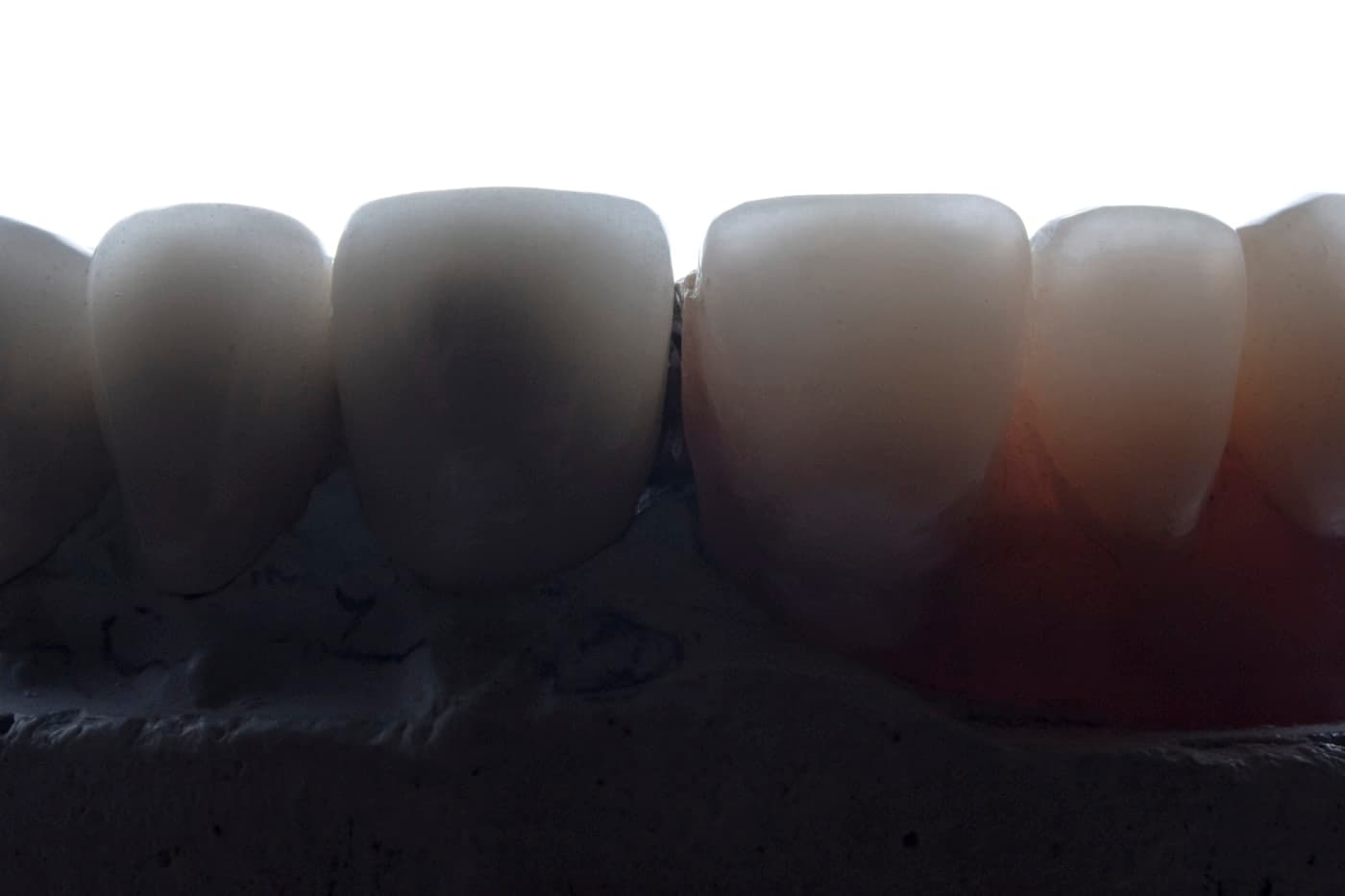
With good care, porcelain veneers commonly last 10 to 15 years, and some patients get longer out of them. Porcelain is durable and resists staining, so what usually decides the number is not the material. It is how the veneers get treated day to day, whether you grind at night, and how healthy the tooth underneath stays.
Veneers are a significant investment in your smile, so asking how long they will last before needing replacement is a completely reasonable question. The honest answer is a range rather than a date. Porcelain itself is a durable, stain-resistant material, and 10 to 15 years is what good care commonly produces. Day-to-day habits are what move you to one end of that range or the other.
Placing veneers usually involves removing a very thin layer of enamel so the veneer sits flush, which means the change is generally permanent. Enamel does not grow back. The tooth will need something covering it from then on.
So replacement is not a question of going back to how things were. It is a new veneer, or sometimes a crown if too much tooth structure has been lost by then. That is worth understanding before the first veneer goes on rather than at year twelve. It is also why we keep preparation as conservative as we can, and only recommend veneers when they are the right fit.
How a veneer fails, and which part you control
A veneer can fail in two ways, and separating them makes the rest of this easier to follow.
- The porcelain itself: it chips, it fractures, or it comes loose from the tooth
- The tooth under it: decay starts at the edge where the veneer meets enamel, or the gum recedes and exposes the margin
The second is more common than most people expect, and it is the one you control with a toothbrush and floss. A veneer cannot decay. The tooth holding it absolutely can.
The join between veneer and tooth is a line that plaque can sit on. Keep it clean and it stays stable for years. Neglect it and decay can start right at that margin, which can mean removing the veneer to treat the tooth underneath.
Gum recession does something similar over a longer timescale. As the gum moves, the margin can become visible, and a veneer that looked perfect can start to show a line at the top. That is a cosmetic failure rather than a structural one, and it is still a reason for replacement.
What shortens a veneer, and what protects it
- Using teeth as tools, such as opening packages or biting nails
- Chewing ice or other hard objects
- Untreated teeth grinding or clenching
- Poor oral hygiene, which leads to decay at the veneer's edge
- Skipping regular checkups, where wear could have been caught early
Clenching and grinding put load on a thin layer of ceramic that was never designed to take it. It usually happens at night, and usually without the patient knowing. MedlinePlus on bruxism describes the same pattern of grinding during sleep. That makes it the most common reason a veneer chips or debonds earlier than it should.
If there are signs of grinding, we will recommend a nightguard. Wearing it is not really optional if you want the full lifespan out of the porcelain.
- Treat them like natural teeth, which means brushing and flossing normally
- Wear a nightguard if you grind your teeth
- Avoid using them to open or bite hard objects
- Keep up with regular checkups so any issues are caught early
What to tell us early, from the first week to the last year
New veneers take a little getting used to, and that is worth knowing before you worry about it. We use local anesthetic when needed so you are comfortable during treatment, and some patients notice temporary sensitivity afterward, which usually settles.
The other adjustment is the shape. Your tongue finds a new edge within minutes and will keep checking it for a few days. If anything feels like it catches when you bite, or one tooth seems to hit first, tell us and we will adjust it. A contact that is left high is the one that chips.
- A small chip at an edge, often at a corner
- A margin that has started to stain, or that shows a dark line
- Roughness you can feel with your tongue
- A veneer that feels like it moves, or that comes off entirely
- Sensitivity in a tooth that used to be comfortable
Tell us about any of those early. A small chip can sometimes be polished or repaired. A veneer that has come loose and is caught quickly can sometimes be rebonded rather than remade, which depends on whether the porcelain is intact and the tooth underneath is sound. Left for months, those options narrow.
When bonding or a crown is the better value
Veneers are not the only way to change a front tooth, and for a given tooth they are not always the longest-lasting choice.
- Composite bonding can repair a small chip or close a small gap in one visit. It costs less and is easier to redo, and it does not last as long as porcelain or resist staining as well.
- Porcelain veneers make sense when you want a lasting change to the shape and color of a tooth that is otherwise sound.
- A crown covers the whole tooth, and is often the better answer when a tooth is already heavily filled, cracked, or root-treated, because a veneer needs solid enamel to bond to.
Cost depends on how many teeth are treated and how complex your plan is. Ask whether the figure includes the temporaries and the try-in appointment, because those are part of a veneer case rather than extras, and starting prices per tooth sit on our pricing page. Financing options are available.
Lifespan belongs in that conversation. The cheapest option per tooth is not the cheapest option over fifteen years if it needs redoing more often. The reverse is also true: sometimes a shorter-term fix is exactly the right call for where you are now.
Who veneers are not right for
If alignment is the real issue rather than color or shape, straightening the teeth first often gives a better result with less tooth removed. We will say so if that is your situation, even when you came in asking about veneers.
- Anyone with untreated decay or active gum disease, which gets dealt with first
- Heavy grinders who are not willing to wear a nightguard
- Teeth with too little enamel left to bond to reliably
- Patients whose main concern is crowding or bite, where orthodontic treatment may be the better path
- Anyone wanting a change that would not work with their bite, which is something we check rather than assume
What to have checked at your next visit
- The margins, for staining, plaque, or early decay
- The gum level around each veneer
- Wear facets and chips that suggest grinding
- Your nightguard, if you have one, and whether it still fits
- Your bite, since a heavy contact on one veneer is how that one fails first
Veneers do not require special maintenance beyond good general oral hygiene. The same habits that protect your natural teeth protect your investment in these.